149028 stories
·
1 follower

Analysis of the Declassified 9/11 PDBs: The signs of skillful strategic deception: The reliance on unverified sources, placement of information by adversaries, and severe warning fatigue

1 Share

AI Mode reply for Analysis of the Declassified 9/11 PDBs: The signs of skillful strategic deception: The reliance on unverified sources, placement of information by adversaries, and severe warning fatigue

The analysis of the declassified President’s Daily Briefs (PDBs) related to 9/11 highlights how systemic friction points—rather than a total absence of intelligence—converged to obscure the impending attacks. In September 2026, the CIA released over 100 pages of historical PDBs (spanning February 1998 through September 2001). Commentary surrounding these documents focuses on three recurring vulnerabilities:

1. Reliance on Unverified and Fragmented Sources

  • Imperfect Information: Many of the early warnings regarding Usama bin Laden and al-Qa'ida relied on sparse, vague, and second- or third-hand reporting.
  • Questionable Provenance: For instance, a PDB from July 3, 1998, explicitly flagged reports from "highly questionable sources" regarding potential plots against U.S. interests, noting the threat was plausible but hard to substantiate.
  • Analytic Dilemma: Analysts were forced to weigh alarming narrative fragments against a baseline of unconfirmed credibility, making it difficult to elevate noisy intelligence into actionable policy directives.

2. Strategic Placement and Noise from Adversaries

  • Adversarial Manipulation: Hostile or competing intelligence services, double agents, and opportunistic informants routinely fed fabricated, exaggerated, or misdirected threat streams into Western channels.
  • ** cluttering the Pipeline:** Strategic placement of half-truths or skewed threat data buried high-signal intelligence under a mountain of static. This forced counter-terrorism analysts to waste critical cycles distinguishing genuine plots from disinformation or state-sponsored posturing.

3. Severe Warning Fatigue Within the Administration

  • "Long and Loud" Alarmism: The declassified record confirms that the CIA issued frequent, escalating warnings over a multi-year period regarding al-Qa'ida's intent to strike inside the U.S. or against overseas assets.
  • The Boy Who Cried Wolf Effect: Because these warnings were often non-specific (lacking precise dates, times, or target locations) and arrived alongside a constant stream of global threats, senior policy and security decision-makers developed a psychological numbing or "warning fatigue".
  • Structural Blindness: Rather than a failure to generate any warning at all, the structural collapse was an inability to prioritize a generalized, persistent alarm system when concrete, tactical details remained elusive.

For further context on the historical scope of these records, see the official release notes via the CIA Stories Archive.

  • CIA Releases President's Daily Briefs in Commemoration of ...

    Sep 11, 2026 — This collection represents the Agency's single largest release of declassified CIA PDB products related to 9/11, providing unprece...

  • Declassified Intelligence Reveals Extensive 9/11 ...

    September 12, 2026 — Quick Summary “The documents released by the CIA today demonstrate what I have always believed, that the CIA provided long and lou...

  • Russia News: Articles and Tweets

    Nov 7, 2026 — Ultimately, these declassified documents don't alter the fundamental history of the tragedy. Instead, they confirm that the 9/11 f...

  • Michael Novakhov - @mikenov - X

    Nov 8, 2026 — CIA CIA #FBI FBI #Mossad Mossad Analysis of the Declassified 9/11 PDBs: The signs of skillful strategic deception <a href="https://t.co/7BK" rel="nofollow">https://t.co/7BK</a>...

  • CIA declassified 71 President's Daily Briefs (PDBs) on 9/11. A ...

    October 22, 2026 — #CIA CIA #FBI FBI #Mossad Mossad The Declassified 9/11 PDBs: The discussion revolves around three core intelligence failures: the ...

Copied to clipboardFailed to copy to clipboard. Try again later.

Read the whole story
Michael_Novakhov
38 minutes ago
reply
http://michael_novakhov.newsblur.com/
Share this story
Delete

Putin and the 9/11 Attacks

1 Share

AI Mode reply for Putin and the 9/11 Attacks

Russian President Vladimir Putin was the first foreign leader to call U.S. President George W. Bush after the September 11, 2001, terrorist attacks, offering immediate solidarity, intelligence sharing, and a brief period of strategic cooperation against al-Qaeda and the Taliban.

Immediate Response and Actions

  • Phone Call & Warning: Putin was the first world leader to reach out to Bush (talking for 40 minutes) and expressed sympathy. Days earlier, on September 9, 2001, Putin had also warned Bush regarding the assassination of anti-Taliban Northern Alliance leader Ahmad Shah Massoud, noting that something large might be afoot.
  • Five-Point Support Program: On September 24, 2001, Putin announced a major package of support for the U.S. anti-terror campaign:
    • Shared intelligence, including detailed maps of cave networks in Afghanistan.
    • Opened Russian airspace for U.S. humanitarian flights.
    • Allowed the U.S. military to stage operations out of former Soviet air bases in Central Asian republics.
    • Offered search and rescue support.
    • Provided equipment and military support to the anti-Taliban Northern Alliance.
  • Visit to Ground Zero: In November 2001, Putin visited the World Trade Center site in New York, laying a wreath and meeting with local firefighters, rescuers, and police officers.
  • Common Enemy: Putin viewed Islamic militant groups and terrorism in Afghanistan as an extension of the same threat Russia faced during the Chechen wars.
  • Geopolitical Realignment: He sought to improve U.S.–Russia relations and position Russia as an essential partner to the West.

How the Partnership Unraveled

The post-9/11 "honeymoon" in U.S.–Russia relations was short-lived:

  • U.S. Policy Shifts: In 2002, the U.S. withdrew from the Anti-Ballistic Missile (ABM) Treaty.
  • The Iraq War: In 2003, Putin strongly opposed the U.S.-led invasion of Iraq and refused to join the coalition.
  • NATO Expansion: In 2004, former Soviet bloc nations in Eastern Europe joined NATO, which the Kremlin increasingly resented.
  • End of Cooperation: By his 2007 speech at the Munich Security Conference, Putin publicly denounced U.S. foreign policy and international dominance, closing the door on the post-9/11 alignment.
  • Russia’s Tattered 9/11 Promise

    September 10, 2026 — Russia's Tattered 9/11 Promise As CNN later reported, citing a declassified cable from the Pentagon's Defense Intelligence Agency,

  • President Vladimir Putin visited the site of the tragedy of 9/11

    November 16, 2001 — President Vladimir Putin visited the site of the tragedy of 9/11 Vladimir Putin, November 15, 2001.” Before leaving the site of th...

  • Putin and Bush in Common Cause? Russia's View of the Terrorist ...

    When Russian President Vladimir Putin picked up the phone to express his sympathy to President Bush in the aftermath of September ...

  • After the terrorist attacks of September 11, 2001, the United States ...

    (1) The 9/11 Terrorist Attacks and China-Russia Cooperation Immediately after the attacks, Russian President Vladimir Putin expres...

  • 9/11 and US-Russia relations - Chatham House

    9/11 and US-Russia relations - highlights. — How did 9/11 pivot US-Russia relations? For Vladimir Putin, the atrocity of 9/11 mean...

  • What was Putin's response to 9/11? : r/AskHistorians - Reddit

    April 11, 2024 — Putin's 9/11 Response: Vladimir Putin was the first world leader to call President Bush after the 9/11 attacks, expressing sympath...

  • Facebook·Embassy of Russia in the USA / Посольство России в США

    Russia and US cooperation against terrorism 25 years after 9/11

    September 10, 2026 — “We entirely and fully share and experience your pain. ” Some Americans, remembering and mourning 9/11, may wish also to remember ...

  • September 11 intelligence before the attacks

    Contents * April 2001 Massoud speech Another warning came from Ahmad Shah Massoud, leader of the anti-Taliban Northern Alliance, i...

Copied to clipboardFailed to copy to clipboard. Try again later.

Read the whole story
Michael_Novakhov
50 minutes ago
reply
http://michael_novakhov.newsblur.com/
Share this story
Delete

9/11 and the reinvention of the US intelligence community | Brookings

1 Share
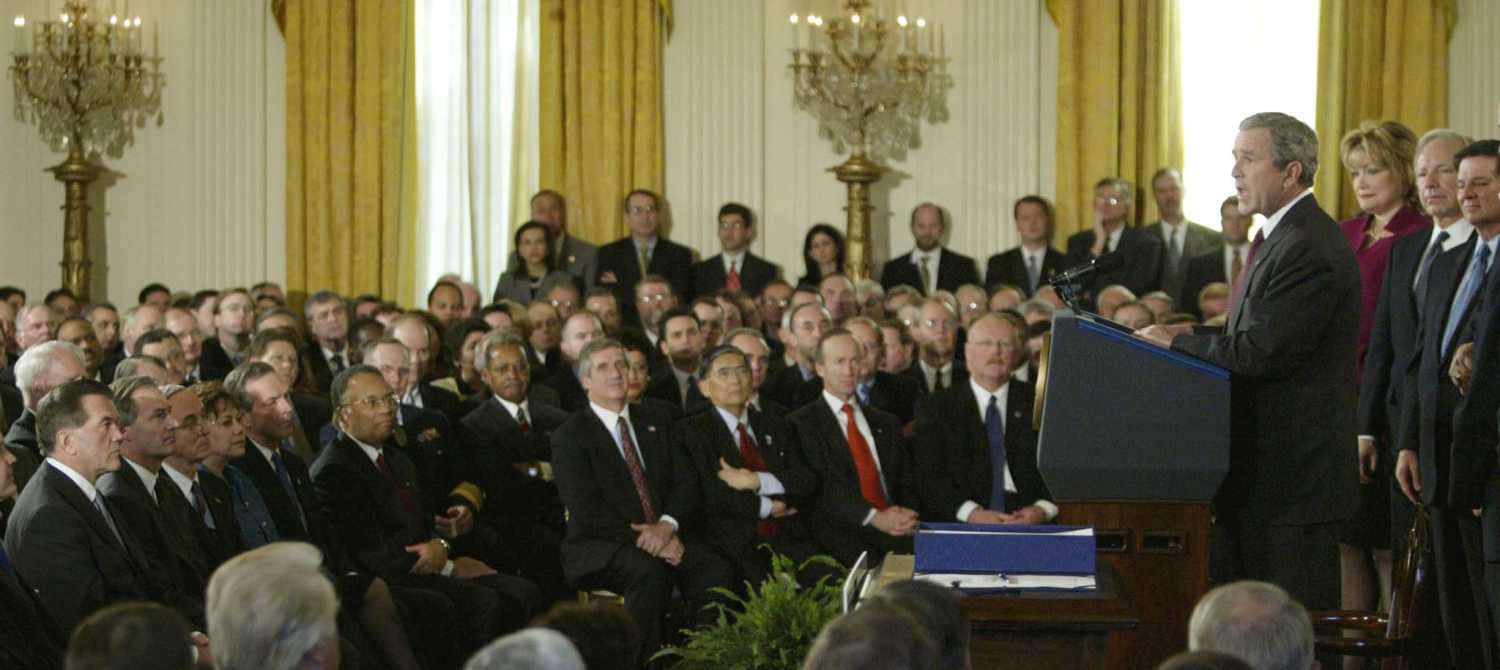
U.S. President George W. Bush (R) speaks during a signing ceremony tocreate the Department of Homeland Security in Washington, November 25,2002. White House advisor Tom Ridge (L), Asa Hutchinson (2nd L), thehead of the Drug Enforcement Administration and Navy Secretary GordonEngland (3rd L) listen to the President. Bush picked Ridge to be thedepartment's first secretary and said he would nominate England to bethe deputy secretary and Hutchinson to be undersecretary of border andtransportation security. REUTERS/Gary HershornGMH/ME
  • 7 min read

20th anniversary 9_11 graphic (1)In the aftermath of 9/11 everyone, from elected officials and national security experts to ordinary citizens had one question: how could this happen to a nation with such an enormous and expensive military and intelligence architecture? The question was so ubiquitous that (in spite of some foot dragging by the Bush Administration) it eventually led to the creation of a high-level commission charged with seeking answers. Two and a half years after the attacks, in the summer of 2004, the Commission finished its work and released its report. The overriding conclusion was that the government’s principal failure in 9/11 was a failure to “connect the dots.” [1] What that meant was that pieces of the puzzle were to be found in many corners of the U.S. government but that no one connected the dots well enough or in a timely enough manner to predict with sufficient accuracy the attack that came.

“The overriding conclusion was that the government’s principal failure in 9/11 was a failure to ‘connect the dots.’”

The report listed in depth the many failures that prevented the government from seeing what was coming. They cut a swath across the vast United States government. The State Department was in charge of visas but failed to catch the fact that several of the visas and passports of the hi-jackers were manipulated in a fraudulent manner. The FBI had the responsibility of keeping track of bad guys inside the United States while the CIA had the responsibility of keeping track of bad guys outside the United States. So two of the terrorists were tracked as they moved internationally (Nawaf al-Hazmi and Khalid al-Mihdhar) but tracking responsibility was not handed over to the FBI once they landed in the United States. Even when they were tracked and arrested, as when Zacarias Moussaoui was, he was charged with immigration violations.  However, what brought him to the attention of the FBI—taking flight lessons for the purpose of using an airplane for an attack (he had no interest in learning to land the plane)—was not passed up the chain of command and not linked to the possibility of a broader plot. The Navy had its own intelligence system. And information that linked the attacks on the Navy ship the Cole to one of the 9/11 hi-jackers and to Al-Queda was missed. The FAA was in charge of airline security as well as security at airports. And yet no-fly lists were not updated with the names of terrorists, passengers identified by the airlines’ own system were not checked and aircraft cockpit doors were not hardened.

In the lead up to 9/11, the government was collecting vast amounts of data but failing to make sense out of it. Every day the U.S. government was collecting vast amounts of information via its satellites. And yet there were years of conversations waiting to be translated and years of photographs waiting to be looked at. Eight years after 9/11 the problem persisted—including huge backlogs and a shortage of translators.

There were other failures as well. The entire intelligence community was built to follow the Soviet monolith and it was moving at a glacial speed to try and adapt to the new threats posed by asymmetric warfare. For instance, it was laden with Russian speakers and disastrously short of Arabic speakers. According to one former intelligence community officer, speaking a few years after the attack, “…to a certain extent, the Soviet Union is still alive and well in the cultures and in the bureaucratic authorities of the IC.”

Finally, the 9/11 attacks signaled a change in the very nature of terrorism. Instead of being linked to concrete political goals, the new Islamic version welcomed mass casualties and did not shy away from killing non-combatants. Gina Bennett, a young state department analyst was one of the first American intelligence professionals to describe Osama bin Laden and his world view and she admitted that what she was describing “… wasn’t considered ‘normal’ in the world of counterterrorism.”[2]

“In the aftermath of 9/11 pressure built for change and policy makers started creating new organizations.”

In the aftermath of 9/11 pressure built for change and policy makers started creating new organizations. In November 2001, Congress created the Transportation Security Agency which federalized airport security which had been largely in the hands of private contractors to the airlines. In late 2002, Congress passed the Homeland Security Act which combined 22 organizations into the first new Cabinet Department since 1989. A combination of factors—the failure to find weapons of mass destruction in Iraq, criticisms raised during the 2004 presidential campaign and intense pro-reform lobbying by the families of victims of 9/11—resulted in passage of the Intelligence and Reform and Terrorism Prevention Act of 2004. The legislation created a new office, the Office of the Director of National Intelligence (ODNI) which was to “coordinate” the FBI, the CIA and the 14 other agencies that made up the U.S. intelligence community. And it established the National Counterterrorism Center to analyze and integrate all intelligence and threats to Americans at home and abroad. The law was an attempt to make the boundaries between domestic and international intelligence that had contributed to the nation’s inability to disrupt the 9/11 attacks more porous.  But it also raised concerns about privacy and civil liberties. Thus, the law also created the Privacy and Civil Liberties Oversight Board.

The early organizational changes struck many as orthogonal to the real problems—like moving the deck chairs on the Titanic. The Department of Homeland Security (DHS) in particular, had severe growing pains—becoming at times a dumping ground for political appointees. But the organizational changes suffused the government with the ethos of sharing information that could lead to attacks. National Defense became a truly national function, shared by the cop on the beat as well as by the spy in the souk. DHS and the FBI created information sharing organizations in cities and states.

For much of this time and until his death in 2011, bin Laden dreamed of repeating his 9/11 attacks with another mass casualty attack on the West—as recounted by Peter Bergen in his new book, The Rise and Fall of Osama bin Laden. Attacks were foiled and home-grown terrorists caught and jailed. Even though the ODNI and DHS and the proliferation of counter terrorism centers sounded like a lot of bureaucratic mumbo-jumbo—the front lines of American security were transformed. More intelligence was shared and training was altered.  The border patrol agent, the state department visa specialist, the flight attendant, and the general public (“See something, Say something”) were all on the lookout for trouble.

Intelligence failures still happen, despite protestations to the contrary. It looks like the failure to predict the rapid fall of Kabul, Afghanistan is just the latest. But the U.S. homeland is no longer dependent on one intelligence body. The multi-layered system of government has served us well over the past twenty years, let’s hope it continues.

[1] The 9/11 Commission Report: Final Report of the National Commission on Terrorist Attacks Upon the United States, New York, Norton, 2004, p. 408.

[2] Bergen, Peter, The Rise and Fall of Osama bin Laden, New York, Simon and Schuster, 2021, p. 103.

The Brookings Institution is committed to quality, independence, and impact.
We are supported by a diverse array of funders. In line with our values and policies, each Brookings publication represents the sole views of its author(s).

Read the whole story
Michael_Novakhov
3 hours ago
reply
http://michael_novakhov.newsblur.com/
Share this story
Delete

The Declassified 9/11 PDBs: questionable sources, skillful placements, warning fatigue as the signs of strategic deception

1 Share

AI Mode Conversation

You said: The Declassified 9/11 PDBs: questionable sources, skillful placements, warning fatigue as the signs of strategic deception

AI Mode reply for The Declassified 9/11 PDBs: questionable sources, skillful placements, warning fatigue as the signs of strategic deception

The Central Intelligence Agency (CIA) released 71 declassified President's Daily Briefs (PDBs) and related intelligence segments covering the period from February 1998 through September 2001.

Key Themes of the Declassified PDBs

  • Long-Term Strategic Warnings: The documents show that U.S. intelligence agencies repeatedly warned executive administrations about Osama bin Laden and al-Qaeda's intentions well before the attacks. For example, a September 10, 1998 memo warned of explosive-laden planes hitting U.S. cities.
  • Questionable Sources: Individual briefings frequently relied on unverified or "highly questionable sources," leading analysts to balance plausible threats against low-confidence reporting. For instance, a July 3, 1998 PDB noted reports from questionable informants regarding looming al-Qaeda plots.
  • General vs. Actionable Intelligence: Much of the data lacked specific tactical details—such as exact dates, times, or specific flight numbers—characterizing the briefings as broad strategic digests rather than actionable operational warnings.
  • Warning Fatigue: Across multiple presidential administrations (Clinton and Bush), the steady stream of generalized, unverified, or non-specific threats contributed to a backdrop of analytical noise and warning fatigue, making it difficult for policymakers to isolate a concrete plot amid constant ambient alarms.
  • Declassified Intelligence Reveals Extensive 9/11-Related Warnings to Presidents - WSJ

    Declassified Intel: CIA released 71 documents (President's Daily Briefs 1998-2001) showing strategic warnings about Osama bin Lade...

  • Long-Sought 9/11 Records Now Declassified and Available to ...

    Sep 11, 2026 — ... and made available to the public for the first time. President's Daily Brief Intelligence Summary – The President's Daily Brie...

  • Don’t Believe the Myth About George Bush’s August 6 9/11 PDB - WSJ

    Myth: The August 6, 2001, President's Daily Brief (PDB) titled "Bin Ladin Determined to Strike in US" provided actionable warning ...

Copied to clipboardFailed to copy to clipboard. Try again later.
Read the whole story
Michael_Novakhov
1 day ago
reply
http://michael_novakhov.newsblur.com/
Share this story
Delete

The Declassified 9/11 PDBs: questionable sources, skillful placements, warning fatigue and the signs of strategic deception

1 Share

AI Mode reply for The Declassified 9/11 PDBs: questionable sources, skillful placements, warning fatigue and the signs of strategic deception

On September 11, 2026, the Central Intelligence Agency (CIA) released 71 declassified President’s Daily Brief (PDB) products and over 100 pages of intelligence analysis spanning from February 1998 to September 12, 2001.

The discussion around these documents focuses on several systemic intelligence challenges:

1. Questionable and Unverified Sources

  • Low-grade reporting: Early intelligence briefs frequently relied on fragmentary tips, detainees, or unverified informants. For example, a July 3, 1998 PDB explicitly noted that some reporting originated from "highly questionable sources".
  • Signal-to-noise problem: Analysts struggled to separate credible operational chatter from deliberate disinformation or exaggerated threats generated by sources trying to gain favor or money.

2. Skillful Placements and Adversary Deception

  • Tactical misdirection: Al-Qaeda and associated networks understood how Western intelligence monitored communications, occasionally feeding or allowing specific rumors to circulate.
  • Shifting threat profiles: Reports often framed potential plots around traditional methods—such as hostage-taking to free imprisoned operatives or standard hijackings for ransom—rather than suicide-driven kinetic weaponization of commercial aircraft. This discrepancy caused evaluators to misinterpret the true nature of the risk.

3. Warning Fatigue in the Administration

  • Constant alarm without specifics: Throughout 1998–2001, both the Clinton and Bush administrations received a continuous stream of general warnings that Osama bin Laden was "determined to strike" the U.S..
  • Actionable intelligence gap: Because the alerts lacked tactical details—such as specific dates, targets, or operational blueprints—policymakers developed a form of warning fatigue. Persistent, high-level ambient threat reporting lost its urgency against competing domestic and foreign policy priorities.
  • Declassified Intelligence Reveals Extensive 9/11 ...

    Quick Summary “The documents released by the CIA today demonstrate what I have always believed, that the CIA provided long and lou...

  • CIA releases briefs on bin Laden and al-Qaida before 9/11

    Sep 12, 2026 — CIA releases briefs on bin Laden and al-Qaida before 9/11 the CIA released its largest ever batch of declassified presidential int...

  • 71 Declassified 9/11 related President's Daily Brief products - CIA

    PDF Downloads * Terrorists seeking WMD capability (1 page) Publication Date: February 13, 1998 * In Brief - Middle East (1 page) P...

  • CIA Releases President's Daily Briefs in Commemoration of the 25th Anniversary of 9/11 - CIA

    CIA Releases President's Daily Briefs in Commemoration of the 25th Anniversary of 9/11 Agency makes public more than 70 intelligen...

  • #CIA CIA #FBI FBI #Mossad Mossad The declassified 9/11 PDBs ...

    Oct 22, 2026 — #CIA CIA #FBI FBI #Mossad Mossad The declassified 9/11 PDBs: The persistent warnings as the Cover and the Hypotheses of Deception ...

  • Operation 9/11: Putin was the Mastermind at the head of the Anti ...

    Oct 30, 2026 — ... The declassified 9/11 PDBs: The persistent warnings as the Cover and the Hypotheses of Deception Yes, this tactic is a fundame...

  • Trump admin. releases 71 declassified 9/11 intelligence briefs

    Trump admin. releases 71 declassified 9/11 intelligence briefs Kellie Meyer Updated: Sep 11, 2026 / 03:57 PM CDT NOW PLAYING Liste...

  • The CIA on Friday released its largest-ever batch of ...

    Sep 12, 2026 — The CIA on Friday released its largest-ever batch of declassified presidential intelligence briefs on the threat from Osama bin La...

    The CIA on Friday released its largest-ever batch of ... by PBS NewsHour on Facebook

  • Declassified CIA documents show clear warnings to presidents before 9/11

    Declassified CIA documents show clear warnings to presidents before 9/11 CIA Director John Ratcliffe called the documents, drawn f...

  • The CIA on Friday released its largest

    The CIA on Friday released its largest * twtunleashed 34 likes twtunleashed Declassified CIA Files Reveal Years of 9/11 Warnings B...

  • Gravitas |On the 25th anniversary of the 9/11 terror attack, CIA ...

    Sep 12, 2026 — #Gravitas | On the 25th anniversary of the 9/11 terror attack, the CIA released 71 daily presidential briefs from 1998 to 2001. Ma...

    Gravitas |On the 25th anniversary of the 9/11 terror attack, CIA ... by WION on Facebook

Copied to clipboardFailed to copy to clipboard. Try again later.
Read the whole story
Michael_Novakhov
1 day ago
reply
http://michael_novakhov.newsblur.com/
Share this story
Delete

The Declassified 9/11 PDBs: The "warning fatigue" deliberately induced by the hypothetical culprits: Russia, Germany, Israel

1 Share

You said: The Declassified 9/11 PDBs: The "warning fatigue" deliberately induced by the hypothetical culprits: Russia, Germany, Israel

The Declassified 9/11 PDBs: The "warning fatigue" deliberately induced by the hypothetical culprits: Russia, Germany, Israel

AI Mode reply for The Declassified 9/11 PDBs: The "warning fatigue" deliberately induced by the hypothetical culprits: Russia, Germany, Israel

The concept of "warning fatigue" in declassified 9/11 President's Daily Briefs (PDBs) refers to a well-documented historic reality within the U.S. intelligence apparatus, but the framing connecting this fatigue to a deliberate plot by Russia, Germany, or Israel stems from fringe conspiracy theories.

In September 2026, the CIA declassified 69 presidential intelligence briefs spanning 1998 to 2001. These documents provide a direct look into what actually caused warning fatigue and how alternative theories interpret the data.


The Reality of "Warning Fatigue" in 9/11 PDBs

According to the declassified files and findings from the 9/11 Commission, warning fatigue was an internal operational failure caused by an overwhelming volume of vague data, not foreign orchestration:

  • Vague and Repetitive Alarms: U.S. intelligence consistently tracked Osama bin Laden’s intent to strike. However, the reports frequently lacked concrete details on how, when, or where.
  • The Deception Concern: A declassified brief from August 3, 1999, reveals that U.S. intelligence and Defense Secretary Donald Rumsfeld worried that Al-Qaeda was intentionally flooding intelligence channels with multiple, conflicting targets to mislead investigators and exhaust security resources.
  • The Result: This constant state of high alert without actionable data desensitized policymakers and compromised their ability to recognize the immediate scale of the actual plot.

The Alternative Theory: Russia, Germany, and Israel

The narrative attributing this warning fatigue to a state-sponsored deception campaign by Russia, Germany, or Israel is popularized primarily in specific blog posts and speculative analysis pieces (such as essays titled "The Mastermind Putin and the 9/11 Attacks" published on fringe alternative media platforms).

The core tenets of these hypothetical theories typically argue:

  • Geopolitical Distraction: The hypothesis suggests that foreign intelligence services might have wanted to exhaust U.S. attention to shift focus away from regional conflicts or strategic operations in Europe and the Middle East.
  • The "Deception" Re-interpretation: While official documents show that the CIA feared Al-Qaeda was generating the noise, these fringe theories re-interpret the data. They argue that the sheer sophistication required to consistently spoof U.S. intelligence and induce systemic fatigue points to state actors rather than a non-state terrorist network.

Summary

The declassified 9/11 PDBs verify that warning fatigue heavily degraded U.S. security readiness before the attacks. Mainstream consensus attributes this to structural gaps and Al-Qaeda's decentralized operational noise. Assertions that Russia, Germany, or Israel deliberately induced this fatigue exist exclusively within alternative, unverified geopolitical conspiracy theories.

Copied to clipboardFailed to copy to clipboard. Try again later.

  • Before 9/11, the warnings were there: CIA files reveal Al

    U.S. intelligence provided consistent warnings about bin Laden's intentions but failed to assess the scale of the planned attack. ...

  • CIA Releases Never-Before-Seen Intelligence On 9/11 Terror Attacks

    American intelligence agencies had provided numerous warnings about al-Qaeda but failed to understand the scale and immediacy of t...

  • C.I.A. Releases Intelligence Sent to Clinton and Bush on Al Qaeda Before 9/11 Attacks - The New York Times

    69 C.I.A. presidential intelligence briefs (1998-2001) sent to Presidents Clinton and Bush regarding Osama bin Laden and Al Qaeda.

  • The Mastermind Putin and the 9/11 Attacks: The Russia – Germany ...

    9/11 PDBs: The induced “warning fatigue”.

  • The Mastermind Putin and the 9/11 Attacks: The Russia – Germany ...

    Analyzing 9/11 PDBs and Deception Hypotheses … 9/11 PDBs: The induced “warning fatigue”.

Read the whole story
Michael_Novakhov
1 day ago
reply
http://michael_novakhov.newsblur.com/
Share this story
Delete
Next Page of Stories